
Most of us know physical fatigue well. Heavy limbs in the morning, dragging through the afternoon, collapsing onto the sofa at the end of the day. And our first reaction is usually frustration — fatigue as an inconvenience, a problem to solve so we can get back to it. Another coffee. Push through. Catch up on sleep at the weekend, maybe.
But what if it’s not an error? Or weakness? What if it’s actually trying to tell you something?
Moving past the “push through” habit
We live in a world that rewards doing over being. There’s a quiet pressure to keep going even when your muscles ache and your mind’s gone slow — so we learn to override the early signals. The tight shoulders. The heavy eyes. The dull ache low in the back.
Ignore those long enough and the body has to get louder. Chronic tiredness, tension headaches, that sudden crash of energy — often that’s just the physical bill for months of overworking. Your body isn’t trying to be difficult. It’s trying to protect you. It’s saying: we can’t keep this pace. But if rest is something you have to earn rather than something you’re just allowed, you stay stuck in the loop.
I spent about 15+ years like this. I told myself I just didn’t need much sleep — regularly in the office until 11pm, running on 5 or 6 hours a night, “fine.” It wasn’t until I moved to Costa Rica and started actually going to bed early, sleeping 8 or 9 hours, that I realised what had happened. I hadn’t been fine. I’d just been tired for 15 years and thought it was normal. It took feeling what not-tired felt like to notice I’d been yawning my way through most of my adult life.
We recommend that you see: Small, simple ways to check in with yourself
What the herd teaches us about rest
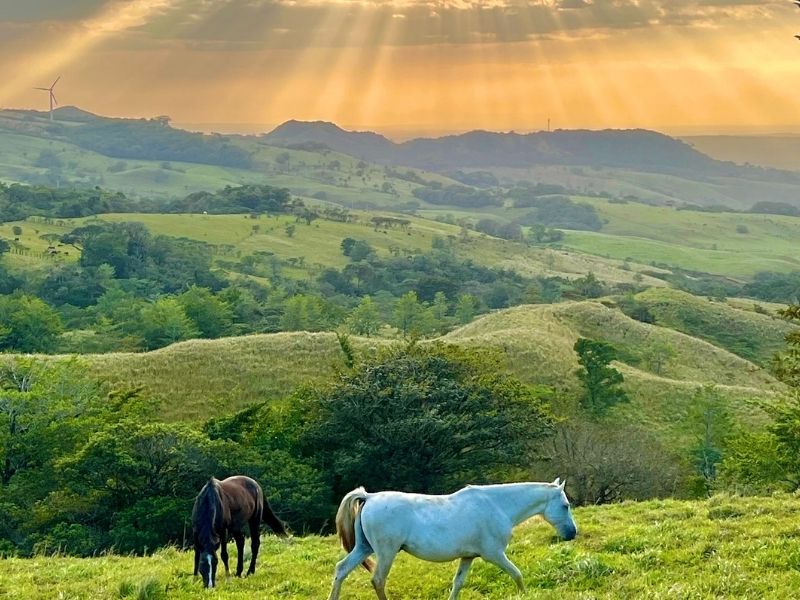
Nature has a very different relationship with energy and recovery. If you watch a horse in an open field, you will notice that she never struggles with the concept of resting. She does not wait until she is completely collapsed from exhaustion to take a break.
Beauty is a good example. She had a bad leg injury a while back — seven months in a stall recovering. She’s completely healed now, but her legs still need more rest than most. So the moment the sun comes out, or she finds a flat, inviting patch of ground, she’s down — lying flat out, resting every bone in her body. No guilt about it, no sense that she’s falling behind the rest of the herd. She just trusts what her body’s telling her. And another herd member will watch over her while she sleeps.
That kind of permission is contagious, if you let it be. Watching a horse go soft the second they’re tired — no performance, no pretending — makes you notice how much energy you spend trying to look capable when you’re actually running on empty.
A simple check-in for your own energy
You don’t need to overhaul your schedule to start listening. Just try changing how you respond the next time it arrives.
When that heavy wave of tiredness hits, try pausing for two minutes before reaching for a distraction. A little quiet curiosity instead:
- Where is the tired feeling sitting? A weight behind the eyes, tightness in the neck, a general heaviness in the limbs — just notice where it lives.
- What kind of rest is it actually asking for? Sometimes it’s your eyes that are tired of screens and want quiet. Sometimes you are tired of talking and it’s solitude you need. Sometimes it’s your muscles, tight from stress, wanting the ground to hold your weight for a while.
- Are you holding your breath? Exhaustion often comes with shallow breathing. One slow breath, abdomen soft, can be enough to notice and feel better.
Letting fatigue guide you
Your tiredness isn’t a weakness to push past — it’s information about where your limits actually are. The more you can meet it with curiosity instead of frustration, the more your system gets the permission it needs to actually recover.
Next time you feel the weight of a long day in your body, try letting out a slow sigh, ask what it’s actually asking for, and give yourself the honest pause.
And whenever you need a reset, or a space to simply exist, remember that the herd and the land at Tula Vida are always here.