
Many of us have been taught that uncomfortable emotions are problems to solve. When sadness appears, we try to cheer ourselves up. When anxiety shows up, we search for ways to control it. When someone we love is struggling, our first instinct is often to find the right advice or solution.
This impulse usually comes from a good place. We want relief, clarity, or progress. We want things to feel better—for ourselves and for others, so we can relax. But sometimes the constant urge to “fix” what we feel can actually make emotions harder to process – as in reality, what we are actually doing is trying NOT to feel them, and to make them go away.
Emotions are like waves of water – they rise up. If we push them back down, block them, or try to shift them into something else without acknowledging them it may work for a while. But eventually we are exhausted from all the energy it takes to hold the waves back, to dam the flow – and at some point, they may burst out unexpectedly and flood our systems (think yelling at an innocent bystander or over-reacting when we break a mug).
Learning to feel again
Learning to feel what we are feeling without immediately trying to change the experience is a quiet but powerful shift. It creates space for emotions to move naturally, instead of forcing them to disappear before they have been fully understood.
This was one of the biggest – uncomfortable, yet powerful – things that horses first taught me (Sally) back in 2013, and something I have been practising ever since.
Why we try to fix our feelings
In our culture, we tend to value actions and solutions; we prioritise making things better than they are today. In England we have expressions such as “Keep Calm and Carry On” or “Stiff Upper Lip” which really mean don’t let those feelings out!
And yet our emotions are not broken machines waiting for someone to come fix them; they are messages from our inside worlds (what we think and feel) based on our past experiences, memories, needs, and how we feel in our nervous systems.
When we rush into action to fix or ignore the feelings we experience, we may miss doing the one, most important thing we could do: listen to ourselves. Sometimes sadness just needs to be recognised. Sometimes anxiety just wants to feel safe or be told that everything is going to be okay. Sometimes anger is asking for an important boundary to be re-established.
Other feelings may need time and gentleness (not strategies and explanations) in order to surf the wave. When we take the time necessary to listen to these emotional messages, they often subside naturally.
You might like to read: Gratitude – not a thing to chase, just a thing to notice
The power of allowing emotions to exist
Allowing ourselves to feel without immediately reacting can feel unfamiliar at first. Many people worry that if they let emotions surface fully, those feelings will become overwhelming or never go away.
In reality, emotions are often more fluid than we expect. When they are met with awareness and acceptance, they tend to move through the body naturally. Like a wave that rises and then falls away.
This is one reason practices like mindfulness and breath awareness can be so helpful. By paying attention to what is happening inside—the rhythm of breathing, the sensations in the body, the subtle changes in mood—we learn that emotions are experiences we can observe rather than problems we must solve. We learn to surf the waves as they arise.
This doesn’t mean never taking action. It simply means allowing space for the feeling before deciding what, if anything, needs to change.
What horses naturally understand
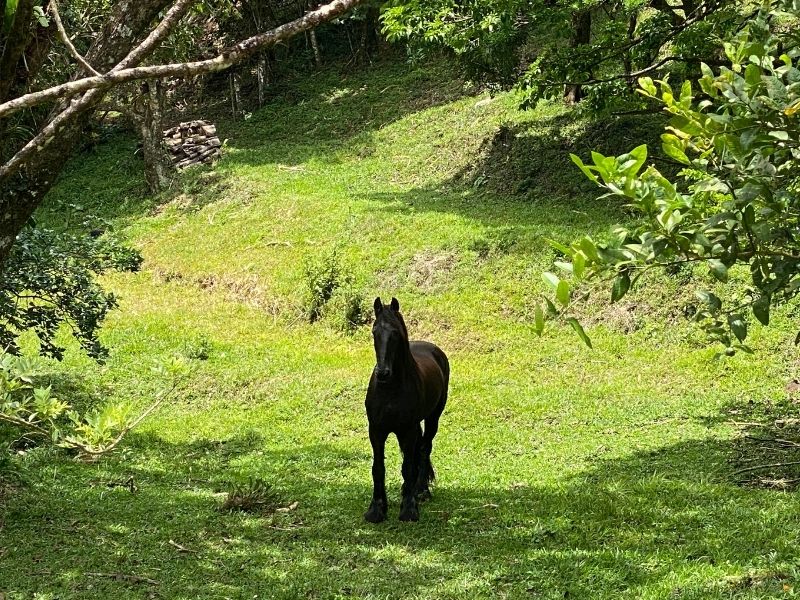
Horses live in a world of presence. They don’t analyze emotions or try to change them—they simply notice what is there, and treat them as helpful information to be trusted and listened to.
Being around horses often invites a quieter kind of reflection. When you stand beside a horse, breathing slowly and noticing what you feel, there is no pressure to perform or explain anything. Emotions can simply exist.
In fact, horses magnify our emotions so we can become more aware of them. It is common to find tears or joy welling when standing by a horse.
Many of our friends at Tula Vida find that in these moments, something shifts. Without trying to force clarity or resolution, their bodies begin to relax. Thoughts settle. Feelings become easier to understand. And the information they hold reveals itself. We start reconnecting in to ourselves again.
Explore Tula Vida’s retreats with horses and learn more about the experiences.
Letting the experience be enough
Being able to experience our feelings without trying to fix everything is not about avoiding problems or choosing not to grow, but about learning to trust that just having the ability to feel is a powerful way to create change. When we learn to stop rushing to fix every uncomfortable emotion we experience, we begin to develop a much better understanding of who we are inside. And what we really want and need.
When we learn to listen to ourselves, we realise we already have all the wisdom and answers that we are looking for.