
If you’ve ever spent time with horses, you might have noticed something curious: sometimes they take a step back before moving forward. At first, it can seem puzzling—or even frustrating if you’re trying to lead them somewhere. But in the world of horses, every movement has meaning. Walking backwards is no exception.
Horses are deeply attuned to their environment and to the energy of those around them. Their bodies, instincts, and emotions are constantly communicating a story—a story that humans can learn to read. Observing behaviors like stepping back can reveal insights about trust, boundaries, and communication, both in horses and ourselves.
Stepping back to assess safety
One of the most common reasons a horse steps backward is simple caution. Horses are prey animals by nature. Their survival depends on noticing subtle changes in their surroundings and ensuring that moving forward is safe.
When a horse takes a step back, she may be scanning the environment, listening, or processing signals from humans or other horses. This pause is a form of mindfulness in motion: the horse is taking a moment to center itself before proceeding.
As humans, we often rush forward without checking in with ourselves. Watching a horse step back is a gentle reminder that taking a moment to assess and reflect can be just as powerful as moving ahead.
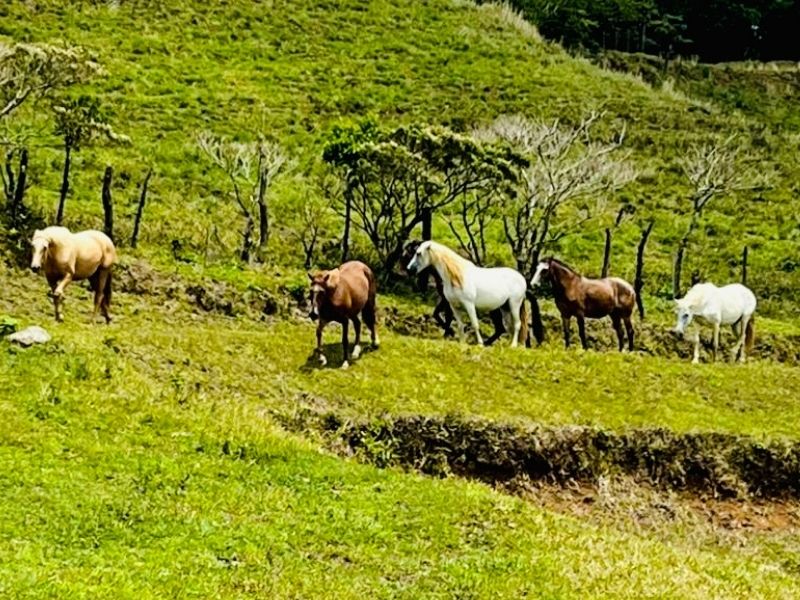
You can meet Tula Vida’s herd here.
Setting boundaries and communicating
Walking backward can also be a horse’s way of setting a boundary. Horses communicate primarily through body language. A step back might mean, “I need space,” or “I’m unsure about this direction.”
Learning to notice these signals builds respect and trust. For example, if you push a horse to move forward when they are stepping back, you may create tension or resistance. But if you pause, acknowledge the behavior, and allow the horse a safe moment, it often strengthens the connection.
This teaches an important lesson for our own lives, too: boundaries are not barriers; they are a form of communication that helps relationships grow healthier and safer. Imagine if you felt unsure, hesitated for a moment, and the person you were with not only noticed but paused too and checked in with you before moving off. You feel seen and heard, felt and understood. And can move forward with trust.
And it’s also a great leadership class. A great leader knows where they are going, and can inspire others to follow in a clear, calm direction. When they feel unsure, they are confident enough to pause and communicate that, while they reassess. Horses let us know when things don’t feel clear, so we get to notice (our lack of direction or clear communication) and learn to modify or clarify it – building confidence in our horse (or team).
You can also read: Tips for building trust with horses
Emotional reflection in motion
Sometimes, stepping back is less about the environment and more about internal processing. Horses, like humans, carry emotions in their bodies. A backward step can indicate uncertainty, hesitation, or even curiosity. It’s their way of pausing to feel and respond to the situation authentically.
Being around horses allows us to witness this emotional honesty firsthand. We see that taking a step back is not failure or retreat—it’s a natural, necessary part of movement and decision-making. Observing it can inspire us to slow down, honour our own hesitation, and approach life with a little more intention.
And working with a horse on this shows us real-time how noticing and acknowledging this reaction or this pause will build trust and connection. It gives us the opportunity to shift ourselves into a calmer, more balanced, more confident presence so that our horse feels better to come forward with us. Leadership training at its best.
What we can learn from a horse’s step back
A horse stepping backward reminds us that life doesn’t always move in a straight line. Progress often includes pauses, reassessments, and gentle retreats. These moments are not setbacks; they are part of a larger rhythm of trust, reflection, and connection.
Next time you see a horse step back, notice what’s going on. Consider what they might be telling you—about safety, boundaries, trust or direction. Let it be a lesson in presence, patience, connection and the wisdom of slowing down before moving forward.
At Tula Vida, spending time with horses gives you the chance to witness these subtle lessons up close. Their movements, even the smallest ones, can teach us about leadership, trust, relationships and how to navigate life with grace.