
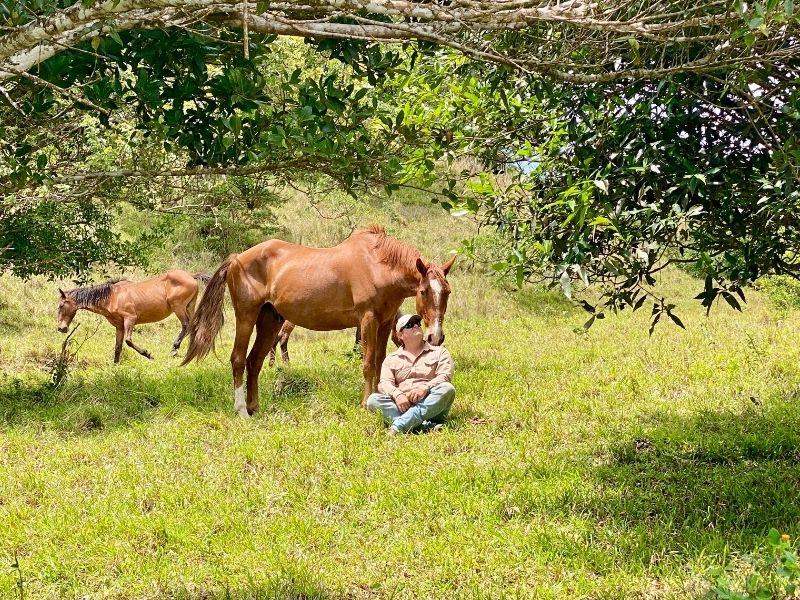
We spend a lot of time thinking about safety here at Tula Vida. We don’t always call it that — sometimes it’s peace, calm, security, even happiness — but underneath, what we’re often really looking for is safety: a place where we can finally drop the hypervigilance, that low hum of “something isn’t quite right.”
It wasn’t on our radar either, until we started working with nervous systems — and looking at the world through a horse’s eyes. Honestly, it was a game changer. Once you know that safety is what your system actually craves, it gets a lot easier to go looking for it.
Maybe you recognise this: safety disguised as something else — a finished to-do list, a tidy inbox, the next milestone. “Once I’ve done X, I’ll relax.” But even when everything around you is fine, there’s still that tight chest, that clenched jaw, that mind that won’t quite settle.
That’s because safety isn’t a thought. It’s a physical state — a message straight from your nervous system, felt in your muscles, your breath, your bones. Recovering from stress means learning to recognise what safety actually feels like in your body.
The difference between mental safety and the felt sense of safety
Many of us are very good at telling ourselves we’re okay. In England we have a phrase for it — “I’m FINE” — which, as any English person will tell you, rarely means fine. It’s keep calm and carry on, whatever’s bubbling away underneath. We’ve just learned to stop listening to our own cues.
You might be sitting in a comfy armchair with a cup of tea, intellectually certain you’re safe. But pay closer attention and you may find your stomach knotted, your breath shallow, your toes curled inside your socks. Your brain knows you’re safe. Your nervous system hasn’t got the memo yet.
This is where the horses come in. They respond to the state of your nervous system, not your thoughts — your actual body, not your story about it. Which means you get to see it too.
A simple exercise to find your baseline
Notice your feet on the floor, or the chair beneath you. Let your weight settle. Find one neutral or pleasant thing to look at — a cushion, a plant, the light on the floor.
Notice what happens. Shoulders soften? A sigh wants to come out? Those small shifts are your nervous system regulating. Everyone’s version looks different — tingling in the hands, a slower heartbeat, an ease in the throat. Worth learning your own.
See more stories and reflections from Tula Vida.
Learning from the horses
In nature, safety is a living, physical reality. If you observe horses, you will see that they do not spend their time analyzing the future or worrying about past mistakes.
Watch a horse graze and you’ll see it — head low, jaw loose, breath slow. A noise startles her, she reacts and then, just as fast, she lets it go. A shake, a sigh, back to grazing. She doesn’t stay braced, because bracing is exhausting. So why do we humans stay braced?! Because we don’t even notice that we are.
Stand quietly near a horse and you’re invited into that same state of safety. She doesn’t need you to explain your stress — she just responds to your body. Breathe slowly beside her, and your nervous systems start to sync.
You might like: What does it mean when a horse sighs, licks, or chews around you?
Taking into your day
We cannot always change the busy environments we live in, but we can change how we carry ourselves through them.
Even small check-ins — noticing tension, feeling the ground, one deep breath — build a pathway back to baseline. That’s where it starts…and you can come to Tula Vida to learn more…