
We live in a world that doesn’t seem to stop. Our minds are bombarded daily with sounds, notifications, and reminders of everything we have to do. The noise is not just ‘out there’, it gets into our heads too, buzzing in a vehicle of thoughts to do with yesterday and tomorrow. Sometimes life feels like it’s going far too fast and we’re merely doing our best to keep up.
Once we see that the world around us is spinning too fast, it’s no surprise that we step into that merry-go-round too. You might find your breathing is short, your shoulders hunched, and your mind has lots of thoughts racing away from you. You can roll through days on pure adrenaline—and we have—and then laugh about it, with a secret yearn for a breathing space where you can just stop, settle, and breathe properly.
When the rush stays in your body
Our culture teaches us to keep going, to find the solution, to push on through whether we’re exhausted or overwhelmed. Our nervous systems do not know how to live in the constant state of alert we impose. As outside noise builds, our bodies come to hold that noise, sometimes without us even being aware. You may sit at your desk, scrolling through sixty unread emails, and your heart is beating a thrum too fast.
Your nervous system is spooling out beneath a shoal of quiet noise. You cannot tell your frenzied mind that it must rest while your body feels rushed. We can see at Tula Vida how people arrive bearing that deep undercurrent of noise. They may look rested, but beneath the surface, the system is vibrating. It takes time for that artificially fast pace to leave the muscles.
You might like to read: Why Slowing Down Is the Hardest — and Most Important — Thing You Can Do
Stepping into the stillness of the herd
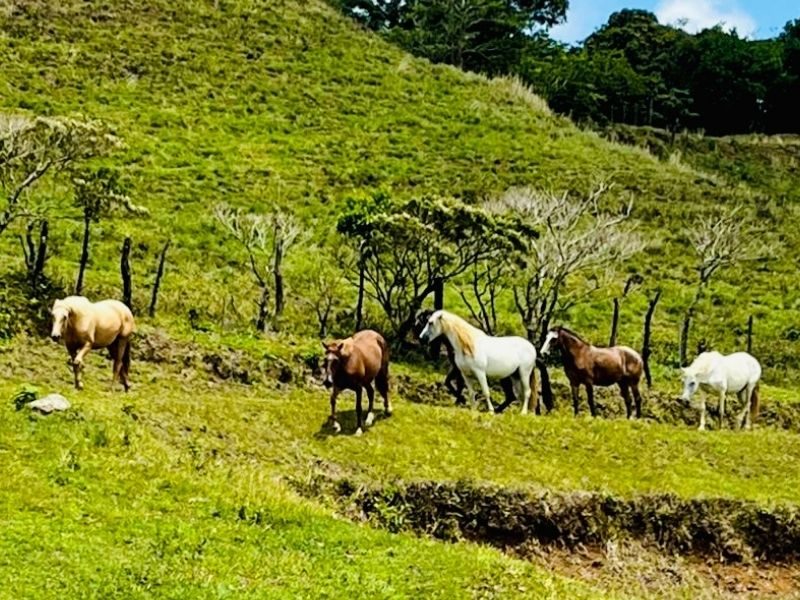
When you walk out onto the land and sit near the herd, the nature of noise begins to shift. Horses do not live in the past or the future; they exist entirely in the present moment. They do not have to-do lists; they do not worry about efficiency, and they never judge themselves for resting when they feel tired. They simply hold the space they are in with complete honesty.
In the presence of a horse, she does not need you to explain your day; she simply listens to what is true right now. If you approach a horse whilst your mind is spinning and your body is tight, he will notice that energy immediately. He might lift his head, look towards you, or gently step aside. This response is never a rejection. Instead, it is a clear, gentle mirror reflecting the rush you are carrying. It is an invitation to acknowledge what is happening beneath the surface, rather than trying to pretend everything is fine.
Step into the stillness of Tula Vida. See more of the ranch here.
How the body learns to settle
There is a beautiful, natural process known as co-regulation. It is the way two nervous systems communicate and balance each other without using words. Horses are true masters of this practice because their safety as a herd depends entirely on their ability to read, share, and settle energy together.
When you stand beside a calm horse, your body naturally begins to tune into her steady rhythm. As she takes a long, deep sigh, your own lungs find a bit more space to breathe. A horse has a large, slow heartbeat that acts as an anchor for our own frantic systems. As you watch him lower his head or shift his weight, your tight shoulders receive silent permission to drop. This is how we learn what presence actually feels like. It is a physical experience that happens in the muscles, the breath, and the bones. On the land, away from screens and clocks, the nervous system finally remembers how it feels to step down from high alert.
Allowing the silence to be enough
We’re not saying you need to change everything in your life to find calm in all of this external noise—it can be as simple as learning how to create small internal spaces of stillness even during a hectic week. We learn from the herd that it’s not necessary to “fix” your feelings ahead of time before being able to rest—tired or anxious, you are always welcome in the paddock.
The noise inside does not stop until we stop resisting it and start to notice it without judgment. By letting go of that struggle, you will notice that the volume will begin to decrease naturally. As you continue with your daily routines, be reminded that the quietness you feel while near horses is a place where your body can always return. You can intentionally breathe in deeply, be mindful of the moment, and create a brief moment of stillness.