
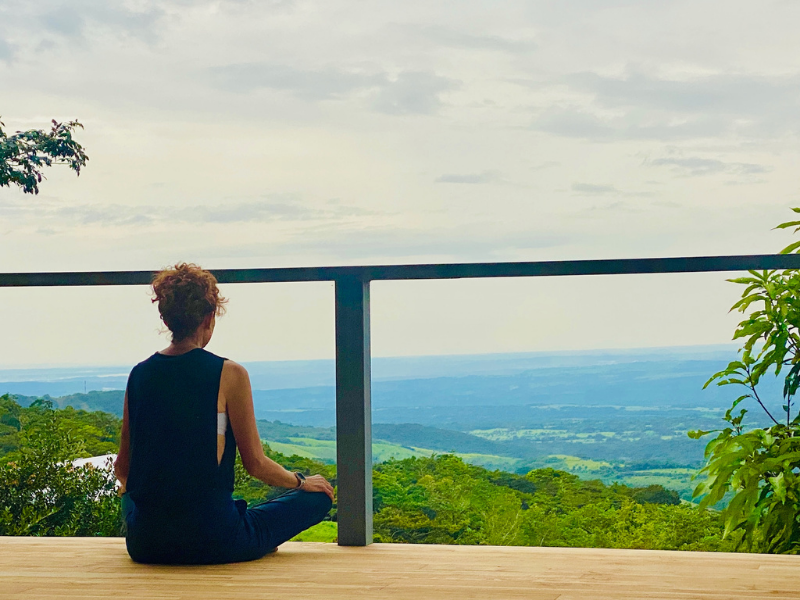
Coming Back to Your Breath
Yesterday I walked out to the herd and — nothing. No one came over. First thought: no one wants to say hi to me today.
Second thought (the one I’ve trained myself to ask after seven-plus years of living with these horses at Tula Vida, even though the self-judgy one still fires first): I wonder what’s going on for me.
I checked in. Turned out I was barely breathing — four hours on the computer will do that. So I took a few deep breaths out, shook out my feet, felt my shoulders drop a notch. Almost immediately, Minne looked up, interested. Gitana wandered over for an ear scratch.
Coincidence? Nope. That was direct feedback on the state of my nervous system — open, settled, reachable.
It’s honestly a bit alarming how far through a day I can get without a single deep breath. So consider this your nudge — especially if you’re reading this on your phone or slouched at a screen (I’m guessing you are). It’s probably been a while since you breathed in or out properly. It only takes a minute, and it changes things.
When stress gets stored in the body
Stress doesn’t just live in the mind — it settles into tight shoulders, a clenched jaw, breath that’s gone shallow without you noticing. For more on this you can read: Learning to listen to the messages behind physical fatigue
This is why many people feel exhausted even when they aren’t physically exerting themselves. Their nervous system has been working overtime for weeks, months, or sometimes years.
When you slow the breath down, you’re sending your body a signal it understands immediately: it’s safe to soften.
Start by noticing your breath
Eric’s favourite technique, the one he comes back to over and over because there’s nothing to get wrong, is Thich Nhat Hanh’s In/Out breath:
Breathing in, I know I am breathing in.
Breathing out, I know I am breathing out.
That’s the whole thing. Four or five rounds, and see what shifts. It gives the brain a job to do, so it can allow your body to settle.
No candle required. No hour set aside. Just a minute, wherever you are — even if the only creature watching is yourself.
Why nature makes breathing easier
At Tula Vida, guests often describe feeling their breath deepen almost immediately after arriving. Walking through the fields, sitting beneath the trees, or sharing a quiet moment with a horse creates the kind of environment where relaxation can happen naturally.
Sometimes the body simply needs permission to let go.
Small daily practices make a big difference
You don’t need an hour-long meditation practice to experience the benefits of conscious breathing.
Small moments throughout the day can have a powerful impact. And finding something green to observe, like a plant or a tree, can really help.